Recently, the internet’s become obsessed with terms that pedestalize. Every influencer, actor, model, or pop star is being dubbed an “It-Girl” or an “icon.” Endless, mind-numbing scrolling has introduced us to thousands of flawless people who are being idolized for thin waists, intelligent beauty routines, a strong falsetto (an admittedly more meritorious attribute), or even their meticulous food regimes. The terms’ definitions have become obscured with overuse. Social media has only accelerated our rapid trend-cycle turnover, and we’ve all seen in the past few years that even people have become ephemeral in the landscape of pop culture. In defiance of this identity-eating black hole, many online have started countermovements. One focuses on fashion and attitudes they consider “classic,” “timeless,” or “classy.” These are labels that I could ultimately argue are subject to interpretation, and may even carry biases with them depending on the context. Another movement encourages Internet users to turn off their phones and seek authenticity. Inspiration, however, isn’t a bad thing either. In an attempt to reconcile the competing instincts to search for figures to relate to and to be true to myself, I’ve found myself looking back on icons who have stood the test of time. Those who have influenced art, culture, and self-expression for decades, or in the case of Joan of Arc, centuries.
Joan’s appearance has always been mythologized; it’s part of why her story in particular has motivated such enduring interest among the public. The teenage peasant girl from Domrémy –convinced she was called by G-d to ensure the rule of Charles VII and prevent an English invasion of France– cross-dressed so she could lead an army. She was an aberration in the patriarchal norm of the time, not only with her manner of dressing, but with the power she was able to command from men in domestic politics, religious institutions, and international affairs. The determination of a teen girl ultimately brought victory to the French at Orléans, against all odds and in the name of her personal faith. Yet, she was later denounced as a heretic and condemned to death at the stake. She is a French national hero and a tragic religious martyr, and the entire saga was facilitated by a change in clothing, from feminine to masculine. Her story illuminates our appearances’ mysterious power to influence, something so callously and haphazardly harnessed in today’s digital age. I’m not the only one who remains enthralled by Joan as a figure of strength and feminist empowerment. She has been the muse of fashion designers and creatives throughout the decades who have sought to make a commentary on the navigation of womanhood in the modern age, the continual martyrdom of those women by the men they aid, and queer gender expression.
Alexander McQueen A/W 1998
If you’re in fashion spaces online, you know that recently there’s been discussion of male designers who create pieces as if they “love women,” –pieces that are generally well-fitted, elegant, and interesting– compared to those that over-sexualize, are ill-fitting, or are boring. What if we expanded our definition of designers who love women to designers who not only appreciate their physical beauty, but also acknowledge their oppression? Their rage? Alexander McQueen, in his 1998 Autumn/Winter collection titled Joan, did just that.
The pieces played on an elemental theme, an experimentation with fire and its place in history. Fire is devastation, but also, due to the myth of the phoenix, symbolic of rebirth. This rebirth and its ties with the Christian ideas of salvation and deliverance in death were certainly themes McQueen evoked in the staging of his show. Worn by red-eyed, bleach-haired, ethereal-appearing models, the Joan collection featured garments made of chainmail. The designs echoed traditional medieval armor and historical artworks by artists like Jean-Auguste-Dominique Ingrés with his Joan of Arc at the Coronation of Charles VII, or John Everett Millais’s 1865 depiction of the saint in a work simply titled Joan of Arc.
While the chainmail pieces tended to take on a more fluid look, draped over the models’ bodies and gliding like cloth, the accompanying fabric pieces were more structured. High-necks and broadened, pointed shoulders aired on the side of a contemporary military uniform. The dichotomies between the flowing appearance of the chainmail and the construction of the fabric elicited a conversation about strength and the interplay of femininity and masculinity. Delicate drapery could be made of armor, and uniforms built for endurance fashioned by malleable fabric. The designs suggested that strength superseded traditional gender roles: the traditionally “soft” appearing female looks could be sewn from something made for war, while the masculine-coded army garments could be shaped from a flexible, sensitive fabric. McQueen was saying that women could possess an inner strength, and men an inner softness, qualities both necessary for the creation of beautiful works. Female models also donned tailored and structured suits, as well as head garments that echoed that of medieval soldiers. The colors of the collection, primarily black and red, tied with the tight-fitting garments, provoked a feeling of claustrophobia, one that could be considered akin to the discomfort of being near flame.
Driving home McQueen’s conversation about gender roles, power, and war was his show’s finale. A model, her face obscured by a skintight red face garment, stood encircled by a ring of fire, her arms open in abandon. The staging was a clear reference to Joan’s death, when she was burned at the stake for heresy as a result of her cross-dressing and unwillingness to denounce her religious visions. Diana Ross’s voice, repeating “You’re gonna make it, you’re gonna make it,” floated over the audience. Though it’s up to interpretation, you could wonder if McQueen was speaking to the possibilities of rebirth, crossing to the safety of the other side, or perhaps even a future where self-expression and female empowerment wasn’t criminalized.
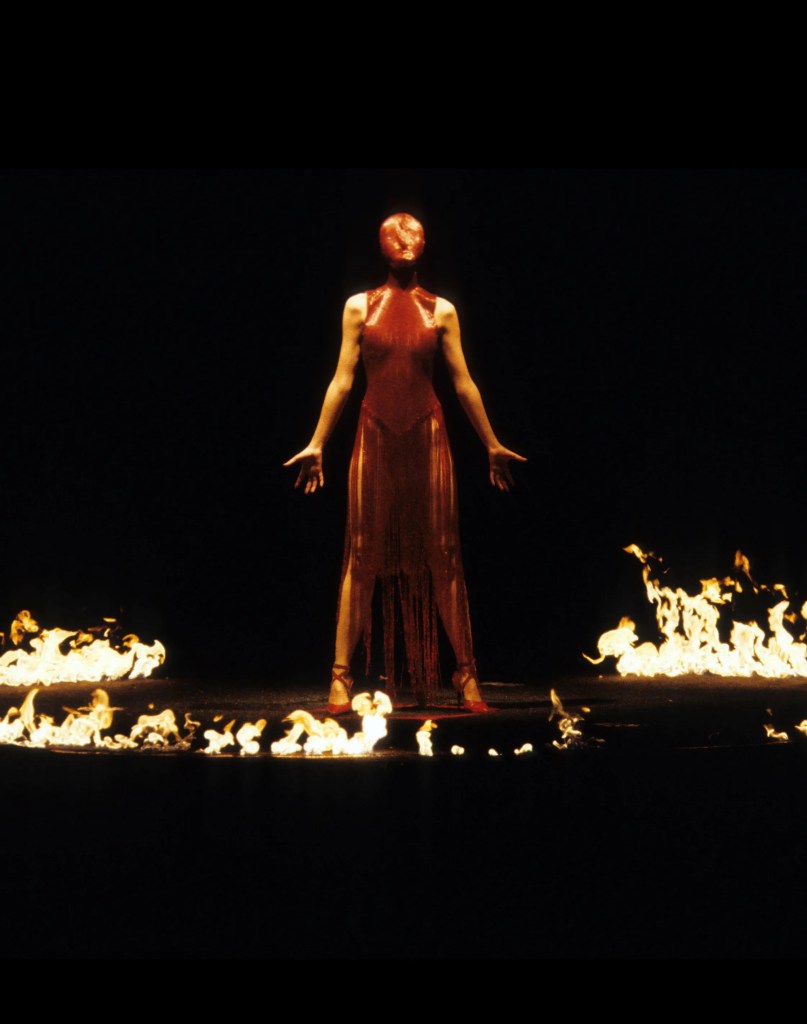
Image from Vogue.
Zendaya at the 2018 Met Gala
The 2018 Met Gala is often referenced as the height of the event’s innovation. Each year, fans of fashion reminisce on the unforgettable theme, “Heavenly Bodies: Fashion and the Catholic Imagination,” and the decadent looks inspired by centuries’ worth of religious art. Zendaya is always eagerly expected at the Met Gala, but in 2018, the star and her longtime stylist and image architect, Law Roach, presented one of her most memorable looks. Zendaya stepped out in a Versace ensemble made of chainmail. Her shoulders and neck adorned with structured plates of metal, the remainder of the dress flowed into a drapery that carried the air of McQueen’s designs, playing on themes of both the masculine and the feminine. A wide belt cinched her waist and a short train swept the red carpet. Two lengths of chainmail descended from Zendaya’s back, vaguely suggesting the image of angel wings. Paired with the look were metallic silver Jimmy Choo shoes. Zendaya also debuted a deep Auburn blunt bob, meant to pay heed to the saint’s masculine shorn hair. The color, as well as the bob’s wavy, tousled finish, is evocative of movement, perhaps suggesting a dance of flames and Joan’s unjust end.
Law Roach, who has become a household name in his own right for his innovative looks, told WWD that the idea to design based on Joan came to him in a dream. That story is mystical in itself, echoing Joan’s own dreamt revelations from heaven. Roach praised Zendaya for being willing to commit to “drama” in her fashion choices, and he was right: there was an undeniable story being told with this outfit. Zendaya was surrounded by women in extravagant dresses, but chose to don this more understated, yet brilliant piece, going against even her own tradition of wearing larger, more feminine dresses. Joan herself was willing to sacrifice everything for her cause: she wasn’t an example of Catholicism’s more ostentatious artistic traditions, but rather of the asceticism that accompanies the stories of saints. Though the idea of being “understated” is a bit ironic given the setting, the sparkling underbelly of the look –the drapery– could be read as a nod to the delicate and dedicated soul underneath the armor, fighting for what she believed in. No one was better fit to pay homage to Joan than Zendaya: a well-known feminist, she frequently plays strong female characters with complex stories. In an interview with InStyle, she previously stated that “Clothes sometimes are very emotional, so I get to embody these different facets… I get to meet these different women through clothes” and also said that the look was one of her favorites. Zendaya’s Versace dress is another example of women seeing Joan’s revolutionary story and exploring their own empowerment, especially as young women under the pressure of the public eye.
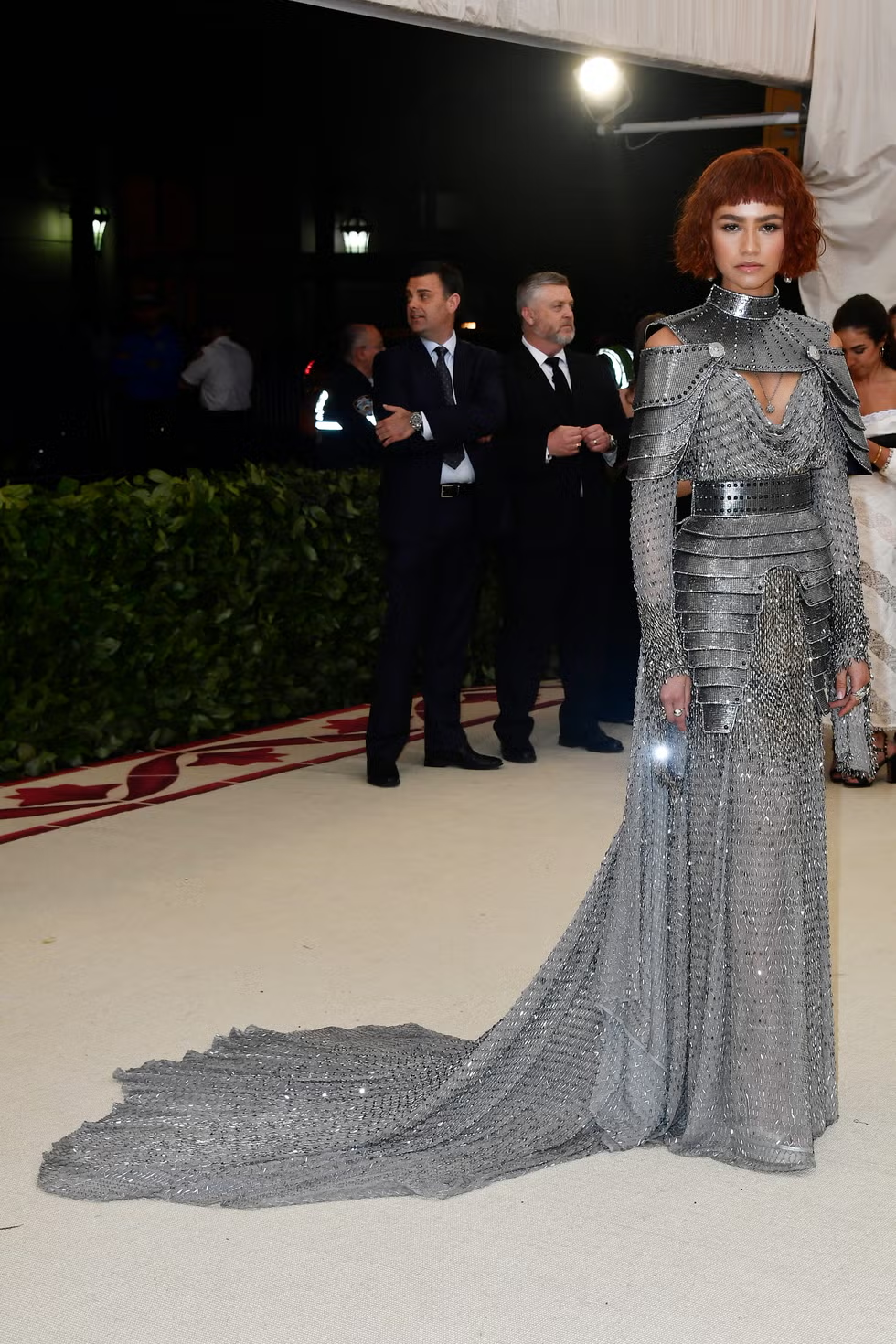
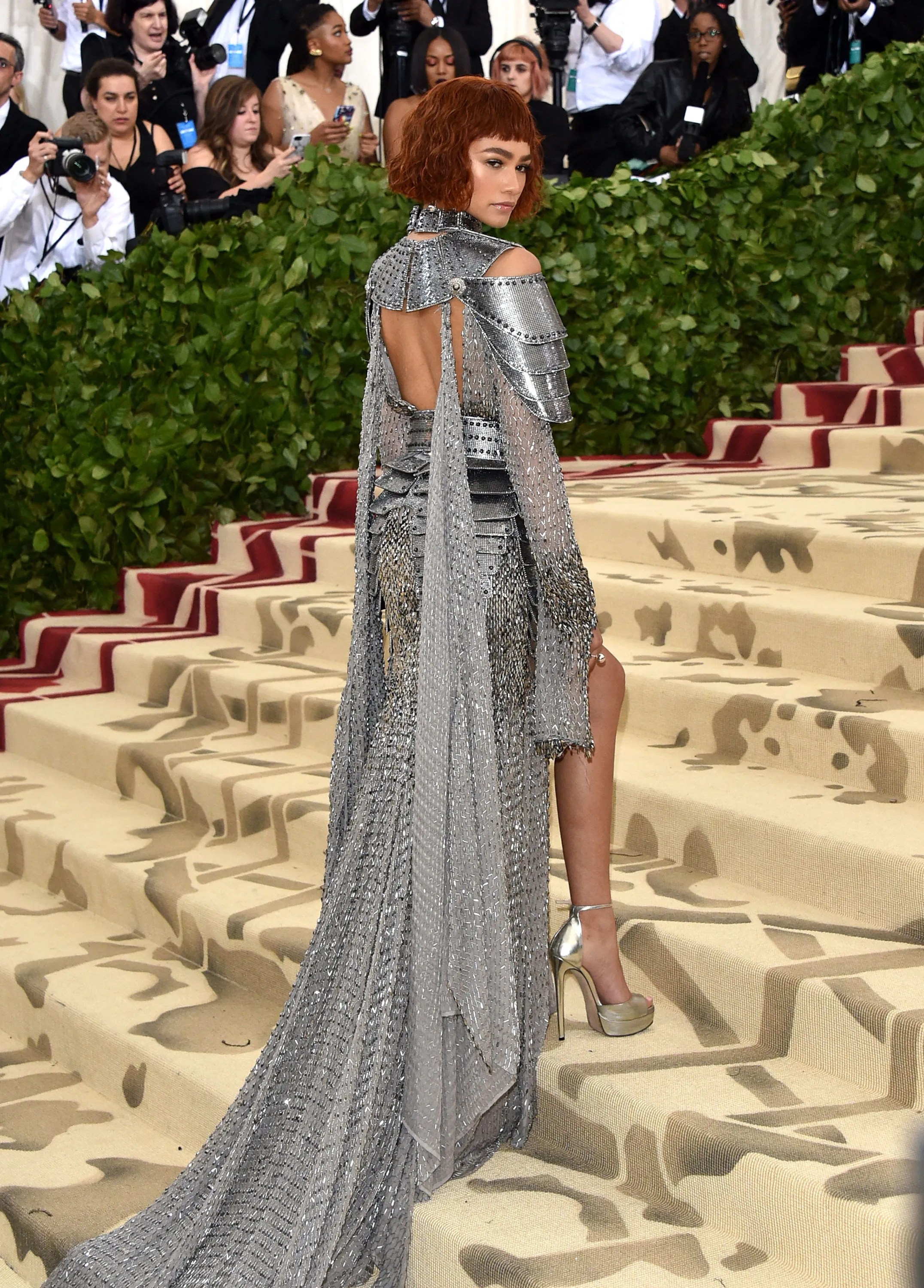
Image from Harper’s Bazaar (1) and Vogue (2).
Dilara Findikoglu A/W 2023
Dilara Findikoglu is a name you’ve probably heard by now. Despite founding her self-titled label less than a decade ago, the Turkish-British designer is already making waves in the industry. Most recently, she collaborated with Kylie Jenner’s clothing company, KHY. Findikoglu hasn’t been playing by the rules to climb the ladder, however– she’s been rewriting them. In fact, for her Autumn/Winter collection, titled “Not A Man’s Territory,” she expressly wanted to explore the theme of feminist revolution. In the wake of the September 2023 protests in Iran over the police killing of Mahsa Amini, the designer realized the potential to make a statement with her work. Amini, was arrested for “improperly” wearing her hijab by the Guidance Patrol–dubbed the “morality police.” The subsequent demonstrations inspired Findikoglu to design a collection imbued with the images of historical female powerhouses. In her looks, she encapsulated female rage and sexuality; she portrayed women fiercely fortifying themselves through the armor of fashion. Findikoglu told Vogue that while designing the collection, she had asked “Why is a woman’s body a question of everything? Why is it exploited so much? It’s always a topic: what should she wear? What shouldn’t she wear? This is my little dance of revolution towards actually possessing your body back.”
The runway event was a performance piece. Chains adorned some pieces, looped through extravagant fingernails or resting on ankles and hips. One model scuttled her way onto the catwalk, looking around the space as if afraid of being seen, clad only in the red bikini of Look 16. Another model displaying Look 4, inspired by Marilyn Monroe, wore a yellow skirt that she shed mid-walk. The move was a nod to criticism of the movie Blonde, which many, including Findikoglu, found to be exploitative of the actress’ pain, playing into the objectification that plagued Monroe during her lifetime. Blonde had stripped Monroe of her ability to tell her own story; Findikoglu wanted to remind women that their story isn’t something that can be taken from them. Look 27 referenced the Iranian hair-cutting protests in defiance of the strictures of the Guidance Patrol. The model removed a black shroud from her head and watched it fall onto the catwalk, shrugging off the burden of male judgment. Each look was christened with a title, reminding us of the old adage, “there’s power in a name.” Every label represented a stereotype placed upon women or a method of overcoming preconceptions. One look, titled Typical Flower, was modeled by actress Paz de la Huerta, who donned the nude dress, embellished with resin-crafted floral accents. De la Huerta made her appearance while still embroiled in a lawsuit against Harvey Weinstein, accusing the former movie mogul of rape. Weinstein’s alleged deplorable acts kicked off the MeToo movement, one of the most notable feminist awareness campaigns of the twenty-first century. De la Huerta appeared as a reminder of the power in reclaiming your own narrative. Her blossoming on stage was a message to the audience that she would not be hidden; that her life was not dictated by the failed attempts by one man to sabotage her career.
So what does this have to do with Joan? Findikoglu’s collection culminated with Look 33, entitled Joan’s Knives. Speaking to Vogue and SSENSE, Findikoglu stated, “If she wears sexy stuff, she is a prostitute, but if she wears boyish clothing, then she is burnt. So she’s taken back her body. She’s coming back for revenge, dressed as she wants. And she has her knives.” The model gazed with defiance and daring as she strutted down the catwalk. The dress consisted of a structured bodice and skirt of knives that flared out from the hips, circumscribing a black dress that ended in pointed shoulders. A hairpiece constructed from knives accompanied the fiery red locks worn with the look. Findikoglu’s interpretation of Joan was a stark confrontation with the double standards women must face. Though women like Marilyn Monroe, known for her femininity and sexuality, are debased and abused, women like Joan, who don masculine dress, are accused of being heretics and unnatural. In Findikoglu’s imagination, she empowers Joan to take revenge on the men who have betrayed her, acknowledging feminine rage, rather than the assumed saintly tolerance typically ascribed to Joan. In the designer’s alternative history, even powerful men must take accountability for the anguish they have caused. The collection is an exploration of the objectification of women’s bodies, feminine anger, and the politics that continue to oppress women. Joan represents the pinnacle of those themes.
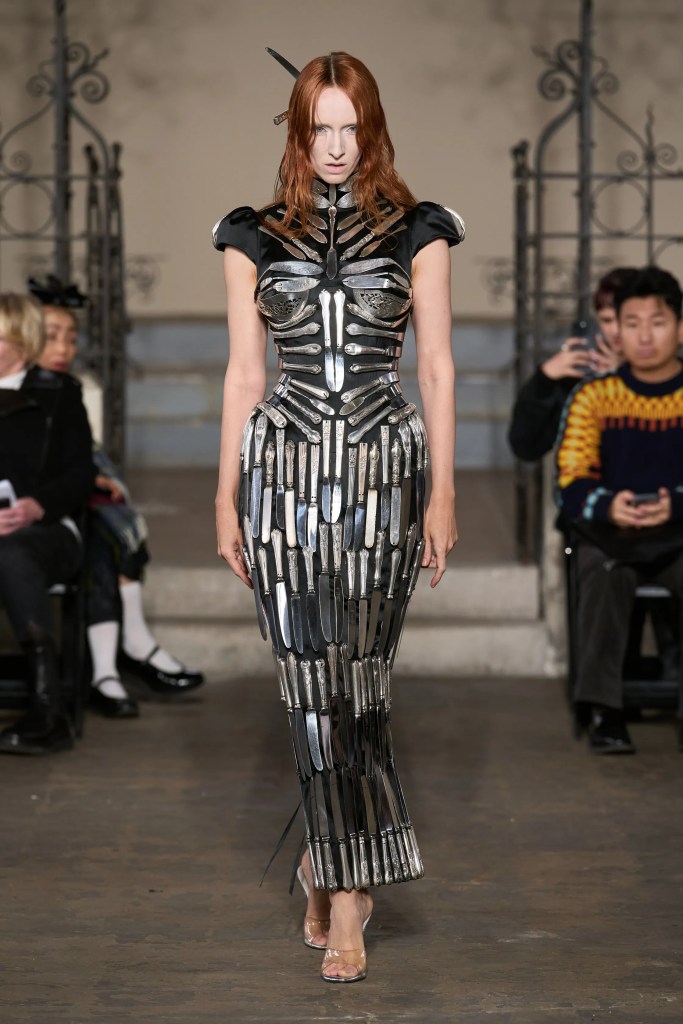
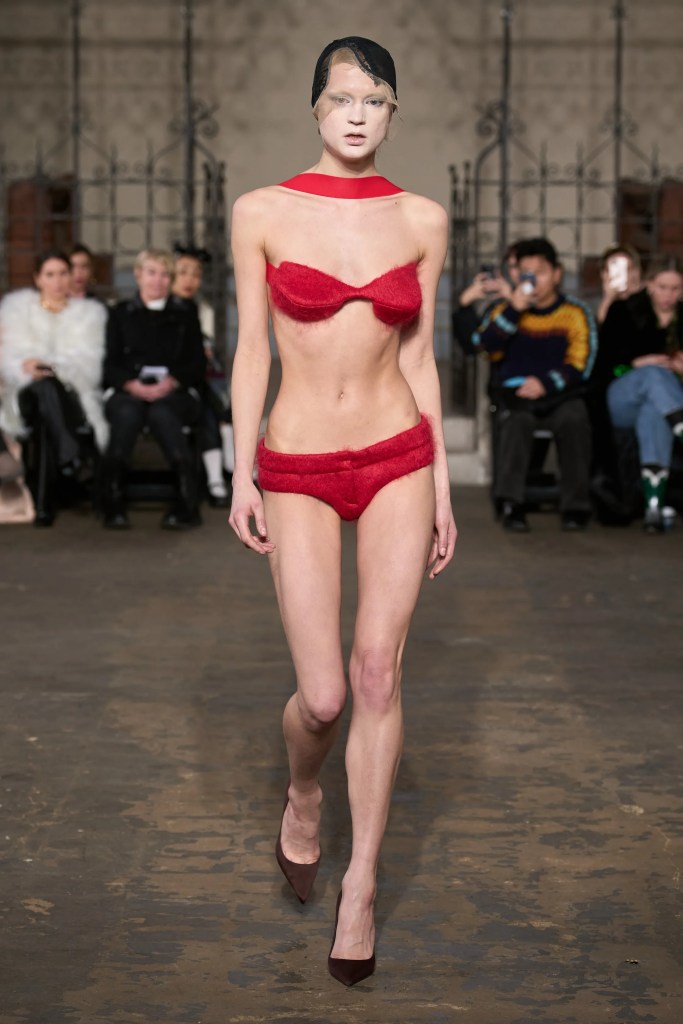
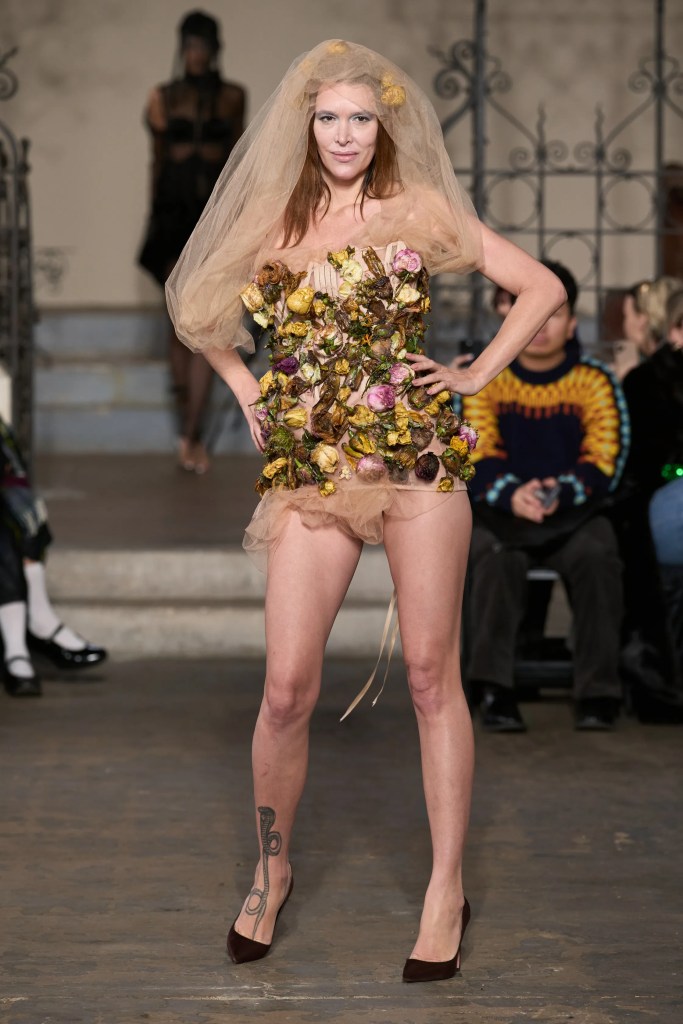
Images from Vogue.
Chappell Roan at the 2024 VMAs
Chappell Roan isn’t a stranger to making headlines with her fashion choices. Her drag-inspired style continues to captivate audiences, and the 2024 VMAs were no different. The pop star wore three medieval-inspired looks –one for the red carpet, another for the performance of her hit “Good Luck, Babe!,” and a final for her acceptance speech –earning her the moniker “Roan of Arc” for the evening on social media. Her stylist Genesis Webb was the mastermind behind all three ensembles.
Her carpet look included a sheer dress from Y/Project’s Autumn/Winter 2024 ready-to-wear collection, espresso-colored with a hint of red. The neckline dipped low to reveal a large cross and neck ties from Soma Faitanin. Peeking out from the skirt were armor-inspired Jeffery Campell shoes. To tie the outfit together, Roan donned a 17th century mint-green robe sourced from frequent collaborators Palace Costume and Prop Co., gripping the hilt of a sword with her long, claw-like nails. She was accompanied by a man dressed in similar medieval-coded attire. Pale face-makeup, dark lips, and heterochromatic contact lenses completed the look. While Roan didn’t explicitly state that the garments, props and makeup were inspired by Joan of Arc, attuned viewers spotted some resemblances. Admittedly, religion was a major component of everyday life in the Middle Ages, but the large cross splayed across her chest could be a nod to the saint, especially in the context of the sword she carried at her side.
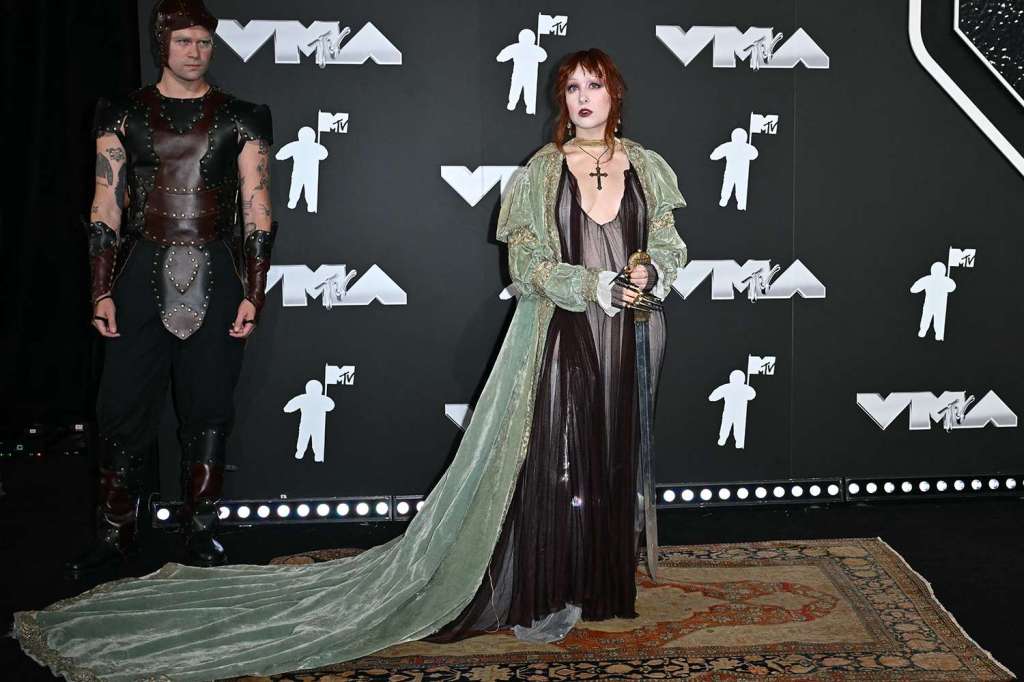
Image from People/Getty Images.
Roan’s references to Joan really came alive during her VMAs performance, when the star, clad in chainmail, began her song by launching a flaming arrow from a crossbow, setting the set ablaze. Zana Bayne leather pieces over more chainmail mimicked a full suit of armor. Flames erupted behind Roan as she sang her ballad, surrounded by armored men, who she maneuvered throughout the set while she marched around the stage. At the song’s climax, she was encircled by male dancers, fending off the points of their swords. The flames and choreography certainly brought to mind Joan of Arc’s infamous and unjust end: surrounded by men whose swords Roan had directed just moments before, the audience began to feel as if they were circling her like leering vultures. Roan ended the song kneeling on her knees, looking up to the sky, a saintly expression.
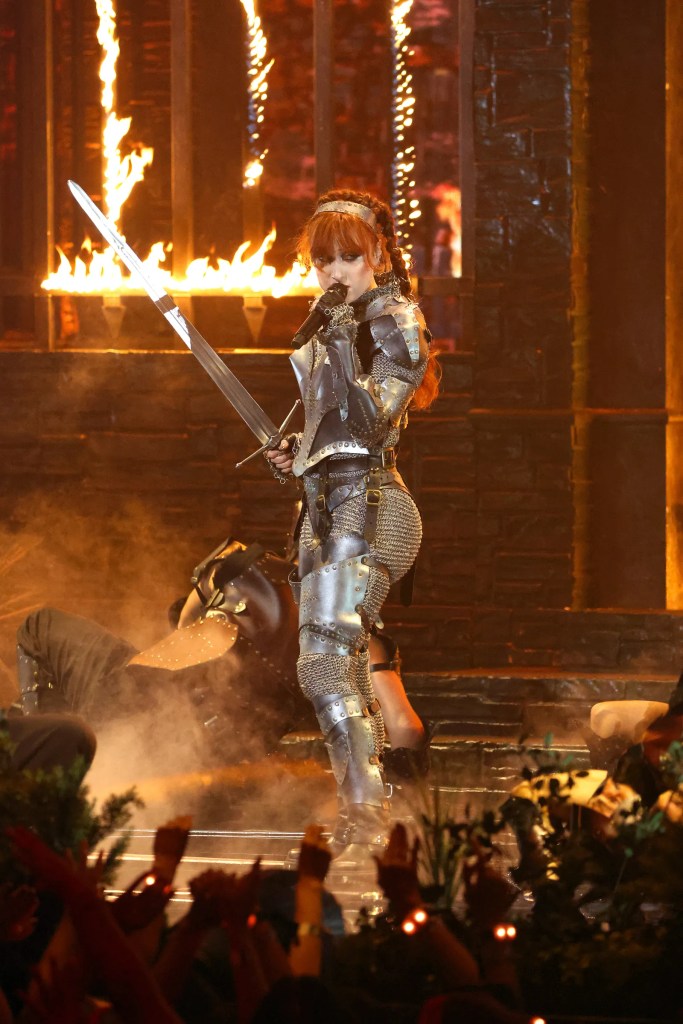
Image from Teen Vogue/Getty Images.
Chappell’s final dress of the night, straight from Rabanne’s S/S 2024 Collection, completed the singer’s homage to Joan. The dress, a slightly-sheer gold and silver chainmail ensemble, was finished with a hood hemmed by dangling, metallic pendants. The asymmetrical skirt showcased a peek of Roan’s leg, displaying her Jimmy Choo heels.
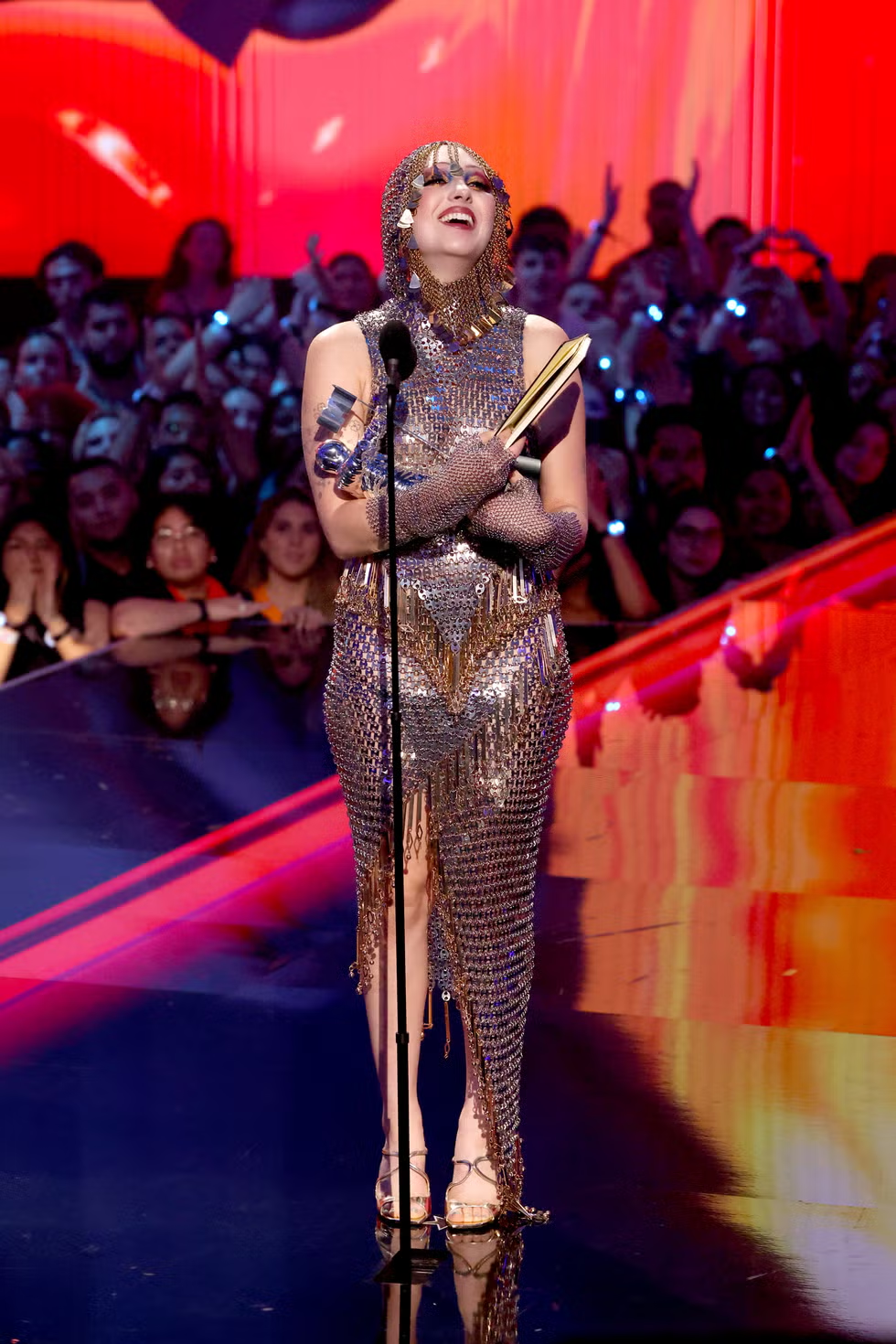
Image from Harper’s Bazaar/Getty Images.
While singularly beautiful pieces of fashion history, Roan’s VMA looks and performance made a broader, more significant reference to the Catholic Saint. Roan is known for her outspoken LGBTQ+ advocacy. She references drag culture through her creative, exaggerated looks; sings candidly about her relationships with women; and frequently makes political posts championing LGBTQ+ rights on her large platform. She ended her VMAs speech with the words, “I dedicate this to all the drag artists who inspired me. And I dedicate this to queer and trans people that fuel pop all around… don’t ever let anyone tell you that you can’t be exactly who you want to be, bitch.” It mustn’t be forgotten that Joan of Arc was ultimately accused of heresy in large part due to how she chose to dress. The androgyny of her cross-dressing offended the tyrannical church leaders who condemned her to death, despite all of her work for the protection of her country and countrymen. Joan died because men were offended by her mode of self-expression and the power her defiance represented. She threatened their patriarchal dominance. For that reason, queer people have long related to the saint, with some speculating that Joan may have been nonbinary. While I am not a historian, I do believe there should be no policing of how anyone chooses to relate to a historical figure. Especially one that invests all admirers with strength and the courage to speak their minds. The androgyny of Joan’s fashion choices even inspired a nonbinary actor, Isobel Thom, and playwright Charlie Josephine to represent a queer interpretation of Joan on stage at Shakespeare’s Globe in 2022. While the play caused significant controversy due to their portrayal of Joan, it’s undeniable that Joan’s story has served as a vessel of representation for both women and nonbinary people throughout history. They can identify with the persecution she faced for her appearance, for her convictions, and for her willingness to subvert male expectations for her behavior. Women and queer people see themselves in the way she held onto her truths– the truths about herself, what she saw and believed– even in the face of death by her oppressors. She refused to apologize for unseating patriarchal and heteronormative authority, and she refused to bow to anyone who demanded she stop being herself. That is a story Roan embodies with her innovative, renegade music and fashion, and it is a story that many women and LGBTQ+ youth can take heart in.
In a culture dominated by recycled images and fast-paced discourse, it’s hard to navigate our modes of expression and our paths to authenticity. Joan of Arc stands as a reminder that ultimately, what you’re distinguished by –and remembered for– is how firmly you remain true to your convictions and your true self, even in the face of oppression, others’ doubts, and fear. Joan continues to serve as an example of fearlessness, bravery, and the fruits of defiance. We could all do well by remembering her a little bit more. Maybe we could even start with our style.
 Kira Manelski


Leave a comment